Window demisters are essential in vehicles, especially in colder climates, ensuring clear visibility and driver safety. Manufacturing begins with producing laminated glass window panes, incorporating thin, nearly invisible electrically conductive heating wires. These wires are carefully embedded to provide even heat distribution and optimal performance.
Acting as heat conductors, the demister operates by passing an electrical current through a grid of metal and resin adhered to the glass surface.
The demister resists electrical flow, generating heat to warm the glass. However, these delicate wires are prone to breakage, leading to common failures.
To maintain quality and efficiency, manufacturers require a precise, automated solution to measure window temperatures and verify correct wiring installation before vehicles leave the production line.
Traditionally, technicians conducted these tests manually, relying on time-consuming hand inspections. Heating elements took 10–15 minutes to warm up, slowing production.
Now, manufacturers aim to automate and accelerate this process for improved speed, accuracy, and reliability.
Automating Quality Tests with Thermal Imaging for Automotive Window Demisters
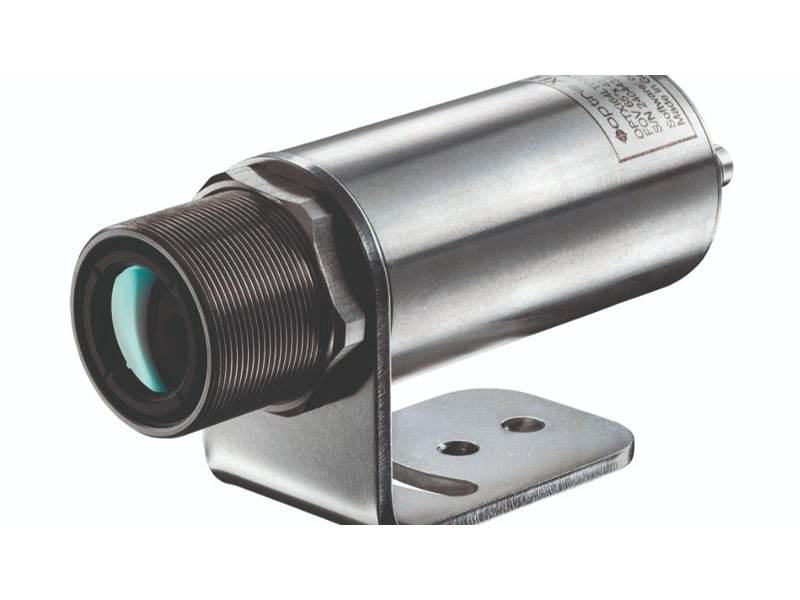
The solution for this application is the PI 640i thermal imaging camera from Optris. This compact VGA camera (640 x 480 pixels) with an outstanding thermal sensitivity of 40 mK detects and evaluates even the most minor temperature differences.
The PI 640i can be installed at any distance from the measurement object within the system, delivering necessary signals to any location (peripheral devices) and allowing operators to focus on other processes simultaneously.
During the final test, the electrical connection of the heating stripes is first examined by applying a defined voltage and measuring the current flow to ensure all wires function correctly without interruptions.
Next, the defrosters are tested in a simulated environment to check their performance under actual conditions. This involves deliberately misting the windows and activating the heaters to observe how quickly and evenly visibility is restored.
Additionally, the window defrosters are tested for durability by repeatedly switching them on and off to ensure reliable performance after many cycles.
The PI 640i IR camera records every thermal change in real-time and effortlessly monitors the entire process.
Suppose the temperature on the heated window surface exceeds or falls below a specific value (e.g., 35°C). In that case, the camera sends an analogue signal to an alarm LED, which is easily visible to the specialist at the certification station in the automotive production facility.
Furthermore, the process can be fully automated, with follow-up actions (e.g., switching off the process) triggered by the Optris system. This automation shortens production time without disrupting the process flow.
Streamlining Automotive Production: Time-Saving Solutions with Infrared Temperature Visioning
The benefits of using Optris IR devices for the customer are clear: the measurement process has been reduced from up to 15 minutes to around 30 seconds, freeing employees for other tasks. These time savings and efficiency gains are significant advantages, with cost savings justifying using the PI 640i.
The PI 640i offers significant advantages in many thermally-relevant production processes. Its high thermal sensitivity allows for quick detection of seat temperature changes, increasing time savings on the production line.
The PI 640i can also capture radiometric video at frame rates of 32 Hz and even 125 Hz in subframe mode, enabling accurate monitoring and analysis of rapid temperature changes and dynamic processes.
The camera is equipped with interchangeable lenses that cover different fields of view (15°, 33°, 60°, and 90°), allowing it to adapt to various printer sizes and applications by selecting the optimal focus and field of view.
The PI 640i is robust and designed for industrial environments. It features an IP67 rating that protects against dust and water. It can operate in temperatures ranging from 0 °C to 50 °C, and separate accessories are available to enhance its durability further.
This ensures reliability and longevity even under demanding conditions.
Various interfaces and a comprehensive software package facilitate integration into existing systems. The camera can be connected via USB 2.0 or, optionally, via a Gigabit Ethernet (PoE) interface. The included Optris PI Connect software package enables simple setup and remote monitoring of the camera.
Additionally, the camera offers several industrial process interfaces, including analogue and digital inputs and outputs, and relays for alarm and fail-safe functions.
Instrotech
Tel. +27 10 595 1831
sales@instrotech.co.za
www.instrotech.co.za
Facebook
LinkedIn
YouTube