The urgent need to reduce plastic packaging to alleviate environmental strain is widely recognized. However, the benefits of plastics should not be completely overlooked. To address this, efficient and resource-saving usage is essential.
According to the Pew Charitable Trusts, plastic pollution could be reduced by nearly 80% by 2040, provided there are global efforts to transform the use, processing, and recycling of plastic.
Plastic packaging remains indispensable in sectors like the Food and Beverage industry due to its versatility. Polymers offer flexibility, ease of shaping, lightweight, hygiene benefits, and convenience in transportation and shelf presence
Customers value convenience, product integrity, and sustainability—despite plastic’s shortcomings.
Compared to alternatives like metal or glass, plastics require less energy to produce, transport, and recycle.
Although the trend towards unpackaged food is growing, viable alternatives to plastic packaging are often lacking for reasons of cost, hygiene, or safety.
Focus on “Reduce, Recycle, Reuse, and Redesign”
The mantra for the industry is to reduce plastic usage and rethink packaging strategies. Companies are increasingly focusing on the four “Rs”: reduce, recycle, reuse, and redesign.
This includes minimizing plastic use, developing new recyclable plastic compositions, and innovating packaging designs like recyclable and resealable bags.
These efforts contribute to sustainability and compliance with legal requirements and customer demands.
Various stringent requirements, including the UN Sustainable Development Goals (SDGs), promote climate protection, responsible consumption, and greener production. Regulations such as the EU Directive 2019/904 aim to reduce plastic consumption, evident in bans on single-use plastics and strategies to cut down on plastic bags.
Manufacturers are committing to using more recycled PET in products and making packaging more recyclable or using less plastic.
Seven Practical Tips for More Sustainable Packaging
Automated and rationalized processes are key to operating more efficiently and sustainably. Here are seven recommendations:
- Sealing. Real-time Monitoring: Monitor and control film closely to maintain product specifications and avoid issues that impact downstream processes.
- Data Collection at the Machine Level: Collect and analyze real-time data on variables such as speed, pressure, synchronization, and temperature to ensure packaging efficiency and quality.
- Forming. Innovative Vision Systems: Use automation solutions to check the integrity, colour, and shape of packaging materials, ensuring high-quality outputs with tight temperature and pressure controls.
- Wrapping: Temperature and Movement Control: Implement applications that ensure precise control over temperature and movement to maintain the integrity and stability of wrapped packages.
- Handling: Seamless Communication Between Systems. Ensure accurate and repeatable handling operations with efficient communication between image processing systems, conveyor belts, and robots, especially when dealing with new film materials.
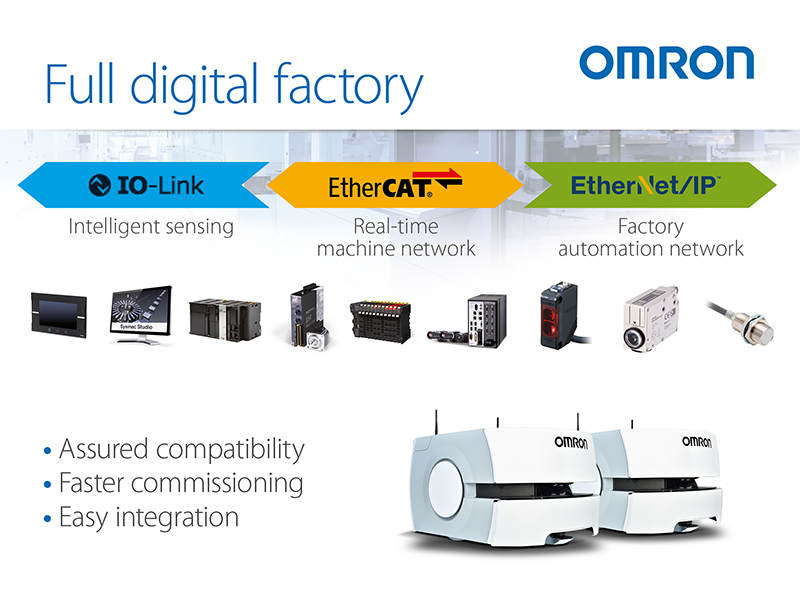
- Closing: High-Resolution Servos: Utilize high-resolution servos connected via machine networks like EtherCAT to manage weight reductions and changes in container size and shape effectively.
- Partner with Experts: Collaborate with experienced partners like OMRON, which offers integrative technology, global services, and a commitment to sustainability goals, supporting companies in their sustainability initiatives.
By implementing these tips, companies can make significant strides toward more sustainable plastic usage in consumer-packaged goods manufacturing.
Omron stands at the forefront of empowering companies in their journey towards greener packaging solutions. With its innovative automation technologies and comprehensive support services, Omron offers pivotal assistance to manufacturers striving to enhance sustainability.
Through advanced automation solutions, Omron enables companies to optimize packaging processes for reduced material usage, improved recyclability, and enhanced overall efficiency.
Real-time monitoring and data collection capabilities ensure precise control over variables critical to packaging integrity and performance, aligning with sustainability objectives.
Moreover, Omron’s commitment extends beyond technological innovation. With a global network of integration partners and a deep understanding of regulatory landscapes, Omron facilitates compliance with environmental standards and regulations.
By leveraging its expertise and collaborative approach, Omron empowers companies to achieve significant reductions in environmental impact while meeting evolving consumer demands for eco-friendly packaging.
In essence, Omron serves as a strategic ally for businesses navigating the complexities of sustainable packaging.
By choosing Omron, companies not only embrace cutting-edge automation solutions but also embark on a path towards a more sustainable future, where innovation and environmental stewardship converge to create lasting value for both businesses and the planet.
Cezanne Gonsior
Omron Electronics (Pty) Ltd
Tel: +27 76 062 8668
Cezanne.gonsior@omron.com
www.industrial.omron.co.za